
Architecture · Entablature
Architrave 额枋
epistylium
English
The architrave is the lowest member of an entablature, carried immediately above the columns. In this architectural sense, Latin epistylium names the horizontal member above the capitals.1
Its front is generally plain in the Doric order. In the Ionic and Corinthian orders it commonly has two or three stepped horizontal bands, called fasciae. Smith also records broader use of epistylium for the entire entablature, so a cited passage must be read in context.1
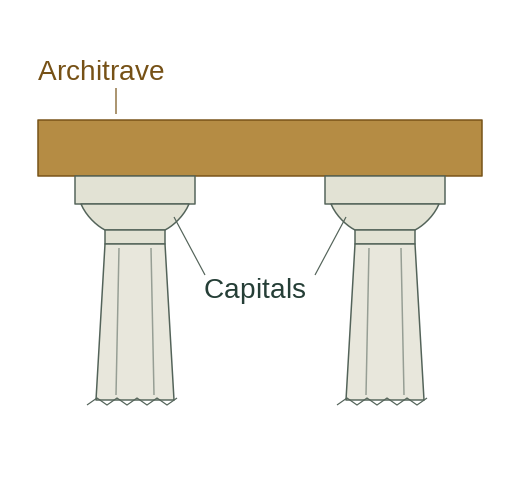
多立克柱头上方的额枋 · 示意图,不按比例
简体中文
额枋是檐部最下层的构件,位于柱子正上方。就这一建筑学含义而言,拉丁语 epistylium 指柱头上方的水平构件。1
多立克额枋的正面通常平整;爱奥尼和科林斯额枋则常分成两层或三层逐级出挑的水平带,称为 fasciae。史密斯也记载了 epistylium 指整个檐部的较宽泛用法,因此须结合所引段落的语境辨识。1
Vitruvius · De architectura 4.3.4
Latin
item epistylii latitudo ima respondeat hypotrachelio summae columnae.
English
Likewise, let the lower width of the architrave correspond to the necking at the top of the column.
简体中文
同样,额枋底部的宽度应与柱子顶端的柱颈相应。
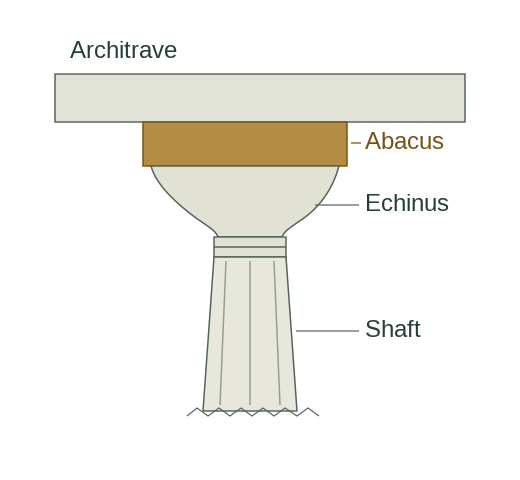 Abacus (architecture)
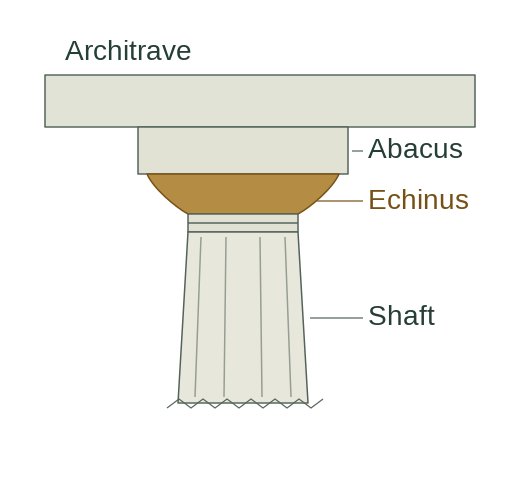 Echinus